
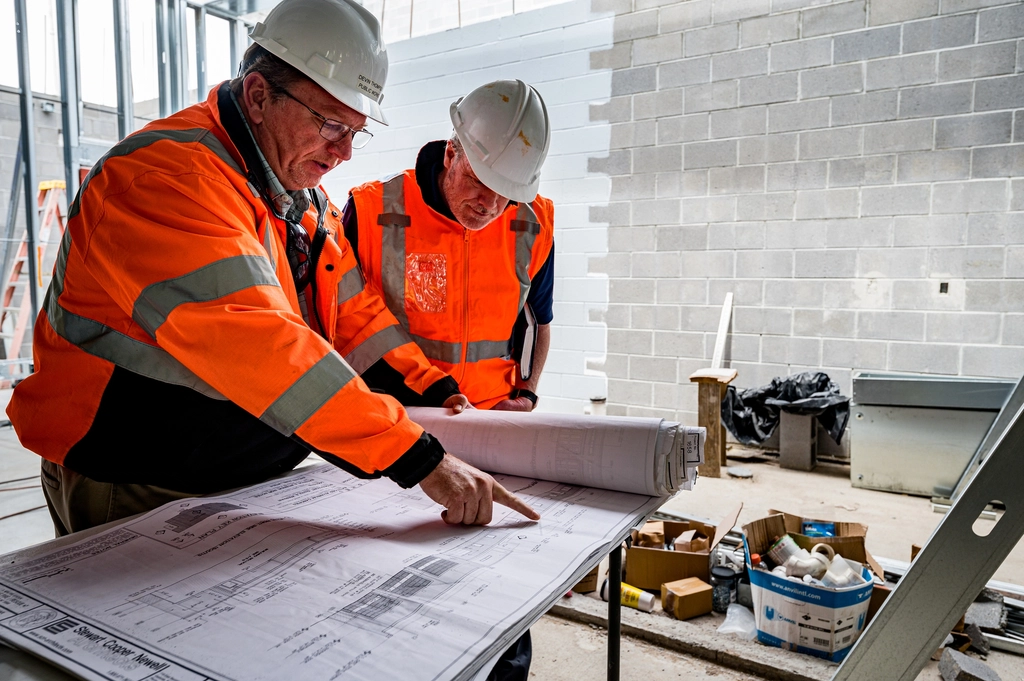
Arizona tenant improvement contractors help businesses across the state turn leased space into places that work. From Phoenix and Tucson to Flagstaff and Yuma, each market has its own pace, codes, and climate. Yet the core process stays the same. This guide explains how commercial renovation and construction work in Arizona, how licensing works, and what owners should check before they hire a team.
Use it as a starting point for your next office, retail, medical, or industrial project.
What Arizona Tenant Improvement Contractors Do
A tenant improvement contractor builds out the interior of a leased commercial space. They manage design coordination, permits, trades, inspections, and closeout. In short, they turn drawings into a finished space.
Typical services include:
- Pre-construction budgets and schedules
- Demolition and site protection
- Framing, drywall, ceilings, and doors
- Electrical, plumbing, HVAC, and fire protection
- Storefronts, glass partitions, and glass doors
- Flooring, paint, millwork, and specialties
- Punch list, closeout, and warranty service
Some contractors also offer design-build services. With this setup, the owner signs one contract for both drawings and building. That single contract tends to speed up choices and cut finger-pointing.
Licensing for Arizona Tenant Improvement Contractors
Arizona requires most contractors to hold a license from the Arizona Registrar of Contractors, often called the ROC. Commercial work uses specific license classes. A general commercial contractor typically holds a broad commercial license, while trades like electrical, plumbing, and glazing hold specialty licenses.
Before you hire, look up each contractor on the ROC website. It is free and fast. Check that the license is active and covers the type of work you need. In addition, look for complaints or past discipline. This simple step protects you from many common problems.
Insurance and Bonding
Of course, licensing is only part of the picture. Arizona tenant improvement contractors should also carry general liability, auto, and workers’ compensation insurance. For larger projects, many owners also ask for performance and payment bonds.
Ask for certificates of insurance before work starts. Also, make sure your landlord’s insurance rules are met. Many leases require specific coverage limits and named insureds.
Arizona Climate and Construction
Arizona’s climate shapes how projects run. Heat, cold, and storms all play a part. In the low desert, including Phoenix and Tucson, summer highs often pass 100 degrees for weeks at a time. Crews start early and plan heavy work for cooler hours. Meanwhile, materials like sealants and adhesives need careful handling in the heat.
In the high country, such as Flagstaff and Prescott, winters bring snow and freezing nights. There, schedules must allow for cold weather, and glass choices focus on keeping heat in.
Across the state, the summer monsoon adds dust storms and sudden rain. Good contractors protect open areas and plan around storm forecasts.

The Renovation Process Step by Step
Most Arizona tenant improvement contractors follow a similar path:
- Site visit and scope review. The team walks the space and reviews the lease and drawings.
- Budget and schedule. The contractor prices the work and builds a timeline.
- Permits. The architect submits drawings, and the contractor tracks review.
- Procurement. Long-lead items like glass, HVAC, and electrical gear are ordered early.
- Construction. Trades work in sequence, with inspections at key stages.
- Closeout. The team finishes the punch list, passes finals, and hands over records.
Each step depends on the one before. Therefore, delays early in design or permitting often ripple through the whole job.
Permits Across Arizona Cities
In Arizona, every city runs its own permit office. Phoenix, Scottsdale, Tempe, Mesa, Chandler, Glendale, Tucson, and others each have their own forms, fees, and timelines. Some cities offer fast-track or self-certification paths for qualified projects.
Because of these differences, local experience matters. Contractors who work often in a city know what reviewers look for. As a result, they submit cleaner drawings and pass inspections more smoothly. For Phoenix specifics, read our guide to Phoenix TI permits.
Glass in Arizona Tenant Improvements
In addition, glass plays a big role in Arizona build-outs. Storefronts invite customers in. Glass partitions bring daylight into offices. Glass doors add a modern, open feel.
However, the sun is strong here. So exterior glass needs low-E coatings and thermally broken frames to control heat. Interior glass, on the other hand, focuses on acoustics and privacy. To learn more, explore our tenant improvement glazing services.
How to Compare Arizona Tenant Improvement Contractors
However, bids from Arizona tenant improvement contractors can look very different. One may include design fees while another leaves them out. One may carry a contingency while another does not. So line up the scopes before you compare prices.
Check for these items in each bid:
- General conditions and supervision
- Permit fees and testing
- Allowances for unknown conditions
- Fire sprinkler and alarm work
- Storefront and glazing scope
- Cleanup and final cleaning
- Warranty terms
Then ask questions about any gaps. The lowest bid is not always the lowest final cost.

Red Flags to Watch For
In general, most contractors are honest and skilled. Still, a few warning signs should make you slow down. Watch for a bid far below the rest. Also, be careful if a firm will not show its license or insurance.
Likewise, pressure to sign fast is a red flag. So is a demand for a large cash deposit up front. Finally, be wary of vague scopes. If a bid says “misc. work” with no detail, ask for more. Good Arizona tenant improvement contractors will explain every line.
Matching Arizona Tenant Improvement Contractors to Job Size
Not every firm fits every job. Some contractors focus on small suites and quick refreshes. Others build large offices, labs, and plants. Each type has its own strengths.
For example, small-job firms tend to move fast. They are often great at work in busy, occupied buildings. Large-job firms, on the other hand, bring deep staff and strong buying power. Pick the one whose sweet spot matches your project. That way, your job gets the right level of care.
Owner Checklist Before You Sign
- Verify the ROC license and look for complaints.
- Collect insurance certificates that meet the lease.
- Call at least three references from similar projects.
- Review the schedule and the long-lead items.
- Confirm who handles permits and inspections.
- Agree on how changes will be priced and approved.
- Read the warranty and closeout terms.
Working Well With Your Contractor
Once the job starts, talk often. Hold a weekly meeting with the contractor and designer. Review progress, upcoming work, and open questions. Make decisions quickly so the crew can keep moving.
Also, keep a written log of changes. Note the date, the cost, and who said yes. Clear records prevent confusion and protect everyone. Finally, walk the space often. Seeing the work in person helps you catch issues early.
What Good Closeout Looks Like
The end of the job matters as much as the start. A good closeout is calm and clear. First, the team walks the space with you. Then they fix each item on the punch list. After that, they pass the final inspections.
Next, you get a binder or a digital folder. It holds warranties, manuals, and as-built drawings. So keep it safe. You will need it for repairs, future moves, and your next build-out. In short, a clean closeout is the sign of a pro.
FAQ on Arizona Tenant Improvement Contractors
Do Arizona tenant improvement contractors need a state license?
Most do. Check the ROC website to confirm the license type and status.
How long does a typical Arizona TI take?
Small refreshes may take weeks. Larger permitted build-outs can take several months.
Start Your Arizona Project
The right team makes your build-out smoother, safer, and more predictable. We provide storefronts, glass partitions, and doors for tenant improvements across the Valley. Visit our Phoenix glazing page or contact us to discuss your project.