
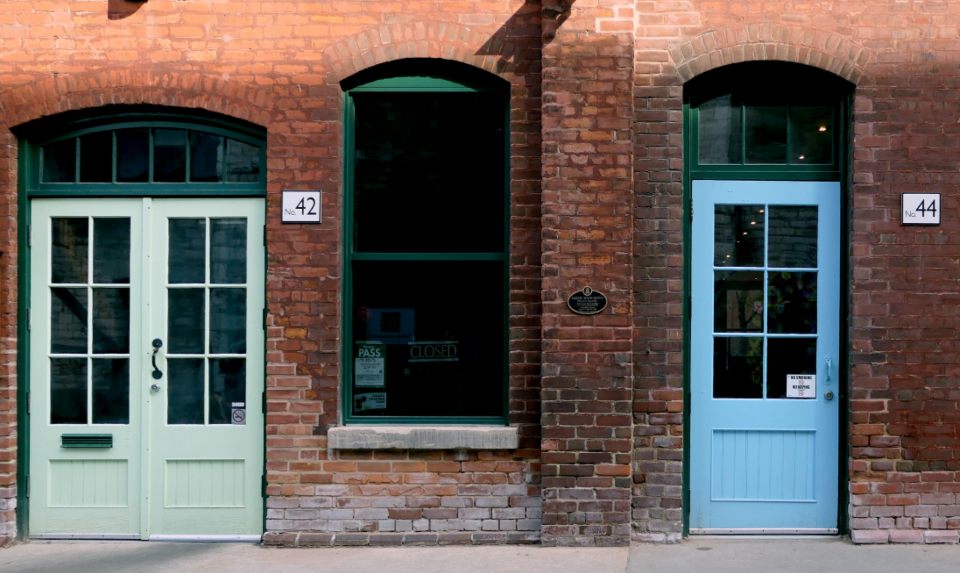
Storefront window installation is part design, part engineering, and part field craft. The frames must hold glass against wind. The joints must keep water out. And the finished wall has to look sharp for decades. In this article, we take a closer look at the parts of a storefront window system and how crews build it on site.
Whether you are an owner, architect, or general contractor, this overview will help you read a glazing bid, review shop drawings, and spot quality work.

The Parts of a Storefront Window System
In general, every storefront window system has the same basic parts. Understanding them makes the rest of the process easier to follow.
- Head: the top horizontal frame member.
- Sill: the bottom horizontal member, often with a sill flashing below.
- Jambs: the vertical members at each end of the opening.
- Mullions: the vertical members between lites of glass.
- Horizontals: intermediate members that split tall openings.
- Glazing stops and gaskets: the parts that hold and seal the glass.
Typically, each part is an aluminum extrusion. The shop cuts, notches, and drills them to fit. Then the crew joins them on site with screws, clips, or shear blocks.
Aluminum Framing Options for Storefront Window Installation
For most storefront window installation projects, aluminum is the go-to frame material. After all, it is strong, light, and easy to shape. It also resists rust and takes a durable finish, so it lasts.
When you plan a storefront window installation, you will choose a few key framing options:
- Frame depth. Deeper frames span taller openings and carry higher wind loads.
- Glass position. Center-set, front-set, or back-set glass changes the look and the drainage path.
- Thermal break. A poured-and-debridged or strut break slows heat flow through the frame.
- Finish. Clear and dark bronze anodized finishes are common. Painted finishes offer any color.
Also, look at how the frame is assembled. Screw-spline frames go together fast. Shear-block frames allow units to be built in the shop. Stick frames are assembled piece by piece in the field. Each method has pros and cons for speed, cost, and quality.
Glass Systems That Fit the Frame
Of course, the frame and the glass must work together. Most storefront window systems accept one-inch insulated glass units, while some also take thinner glass. Likewise, many accept quarter-inch single glass for interior work.
Common glass makeups include:
- Clear tempered insulated units for general use
- Low-E coated units for better energy performance
- Laminated units for security and sound control
- Spandrel glass to hide floor edges or structure
Glass thickness and type depend on wind load and lite size. For example, a large lite on a windy corner may need thicker glass. Your glazier or engineer should run the numbers using recognized standards. The Fenestration and Glazing Industry Alliance publishes many of the test methods the industry uses.

How Crews Handle Storefront Window Installation on Site
During a storefront window installation, field work follows a careful order. Skipping a step usually shows up later as a leak or a misaligned door.
1. Check the Opening
First, the crew checks that the opening is plumb, level, and square. They also confirm the size against the shop drawings. If the opening is out of tolerance, they flag it before they start.
2. Install the Sill Flashing
Next comes the sill flashing. This metal pan catches any water that gets past the frame. Then it sends that water back outside. End dams at each side stop water from running into the wall.
3. Set and Anchor the Frames
After that, the crew sets the frames on shims. They anchor the frames to the structure at the spacing shown on the drawings. As a result, good anchoring keeps the wall stable under wind and daily door use.
4. Set the Glass
Then the glass goes in. Before anything else, setting blocks go under each lite to carry its weight. Gaskets or structural tape hold the glass in place. Finally, the crew snaps on the glazing stops.
5. Seal the Perimeter
Last, the crew seals the joint between the frame and the building. They clean the surfaces, install backer rod, and tool the sealant. A clean, well-shaped bead is a sign of a careful crew.
Water Testing After Storefront Window Installation
Even good crews make mistakes, so testing every storefront window installation is smart. That is why many projects include a field water test. During the test, a technician sprays water on the frame at a set pressure. Meanwhile, someone inside watches for leaks.
Besides testing, look for these quality markers:
- Even sight lines and tight corner joints
- Glass centered in each pocket
- Weep holes open and clear
- No scratches or dents in the finish
- Doors that swing freely and latch every time
Thermal Performance in Storefront Window Installation
Aluminum moves heat quickly. Without a thermal break, the inside face of the frame gets cold in winter. As a result, moisture in the room can condense on the metal and drip onto the floor.
To prevent this, a modern storefront window installation uses thermally broken frames and warm-edge spacers in the glass units. Together, they keep the inside surfaces warmer. In addition, low-E coatings reduce heat loss through the glass itself.
Hot climates face the opposite problem. There, the goal is to block solar heat. A spectrally selective coating lets in daylight while rejecting much of the heat. Consequently, the space stays cooler and the air conditioning works less.
Ask your glazier for the U-factor and solar heat gain numbers for the full system. Then compare them with your energy code limits before you approve the order.
Doors and Entrances in the Same System
Most storefronts include at least one entrance. Typically, the doors come from the same maker as the frames, so the finish and sight lines match. Medium stile doors are a common choice for retail. Meanwhile, wide stile doors handle heavy traffic and allow sturdier locks.
Door framing needs extra strength. Because doors swing thousands of times a year, the jambs and head take more stress than the rest of the wall. So installers often add steel reinforcing or deeper members at the entrance. They also set the threshold flush with the floor to meet accessibility rules. For more on this, see our page on commercial glass doors and entrances.
Mistakes That Hurt Storefront Window Installation
A few errors show up again and again. Thankfully, each one is easy to prevent with good planning.
For one, crews sometimes skip end dams on the sill flashing. As a result, water runs into the wall at the corners. Another common error is blocked weep holes. When that happens, water backs up inside the frame. In addition, some installers set glass without setting blocks. Over time, that can crack the glass or break the seal.
Finally, rushed sealant work causes many leaks. Sealant needs clean, dry surfaces and the right joint size. So build enough time into the schedule to do it right.
Maintaining Your Storefront Windows
Good maintenance protects your investment. Fortunately, the routine is simple. Most owners can handle it with a yearly checklist and a trusted service crew.
- Clean the glass and frames with mild soap and water.
- Keep weep holes clear of dirt and debris.
- Inspect sealant joints for cracks or gaps.
- Check door closers, pivots, and locks for smooth action.
- Look for fogging between panes, which signals a failed seal.
Also, avoid harsh cleaners and razor blades on coated glass. They can scratch the surface or strip the coating. When in doubt, ask your glazier which products are safe.
Working With the Right Glazier
Ideally, a strong glazing partner handles design support, shop drawings, and field work under one roof. Consequently, fewer details fall through the cracks. Look for a team with commercial storefront experience, clear communication, and solid references.
Our crews handle full storefront packages for new buildings and tenant spaces. See our storefront glass services or learn how we act as a glazing subcontractor for builders.
FAQ on Storefront Window Installation
How long does a storefront window installation take?
Field work often takes days, not weeks. However, ordering frames and glass can take much longer, so plan ahead.
Can I change the frame color later?
Yes, but it is costly. Field painting is possible, yet it rarely matches a factory finish. Choose carefully up front.
Next Steps
A well-built storefront window system protects your building and invites people inside. To plan your project, contact our glazing team for drawings review, budget pricing, and a realistic schedule.